AI in Veterinary Care: What’s Actually Coming to India
 Abhinandan Banerjee
·
September 15, 2026
·
3 min read
Abhinandan Banerjee
·
September 15, 2026
·
3 min read
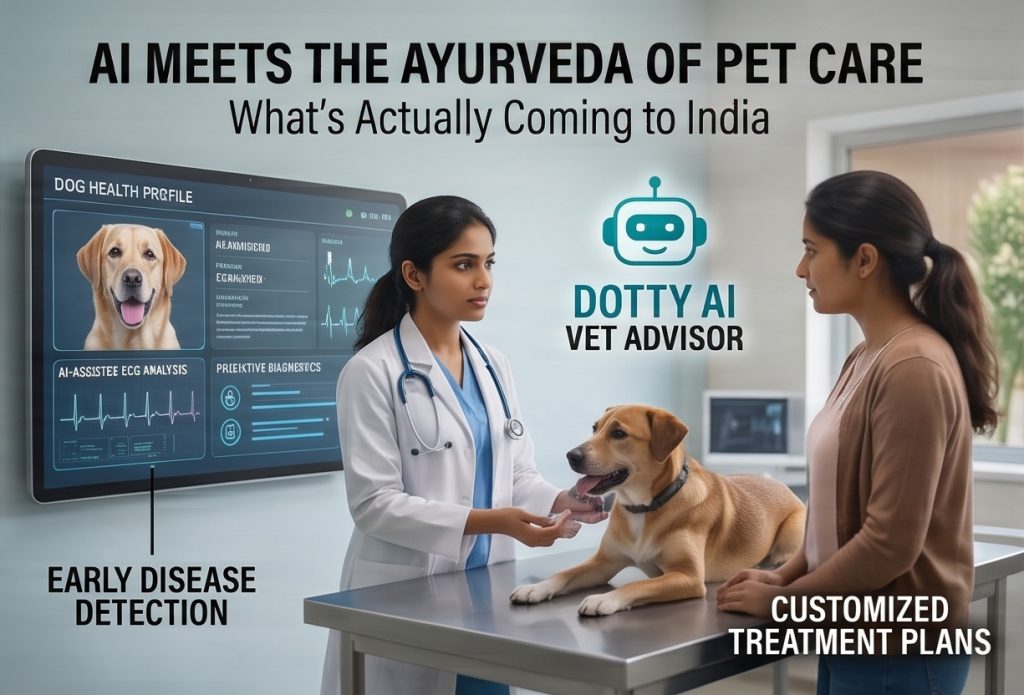
AI veterinary care in India is no longer a “someday” story — it’s already sitting on the exam table. From AI-read X-rays in metro clinics to apps that flag a limping dog before the owner even notices, the technology is moving faster in India than most pet parents realize. Here’s what’s actually real right now, and what’s still a few years out.
What AI Is Actually Doing in Clinics Today
Forget the sci-fi robot vet. The real AI in veterinary medicine today is quieter: software that reads X-rays and ultrasounds for early signs of tumors, heart disease or fractures, often catching things a tired human eye might miss on a busy OPD day. Add to that AI-assisted ECG analysis, symptom-checker chatbots for triage, and predictive tools that flag which patients are at risk of a specific condition based on breed, age and history. None of this replaces the vet — it just hands them a faster first read.
Why India Is Actually the Interesting Market Here
Globally, the AI-powered veterinary diagnostics market was worth about $652 million in 2024 and is projected to hit $2.6 billion by 2033 — a 17% annual growth rate. The bit that matters for Indian pet parents: India is projected to post the fastest growth rate of any country in the Asia-Pacific region over that period. That’s not a coincidence. India’s own veterinary diagnostics market is climbing from roughly $248 million in 2025 toward $443 million by 2034, pushed by rising pet ownership, a shortage of specialist vets outside major cities, and clinics leaning on digital tools to stretch limited resources further.
The Roadblocks Nobody Mentions
India’s vet-to-pet ratio is nowhere close to markets like the US or UK, and that gap is exactly why AI triage and remote monitoring tools have real work to do here — not as a luxury upgrade, but as a way to get a first opinion to a pet in a Tier-2 city where the nearest specialist is three hours away. The catch: patchy internet in smaller towns, a shortage of India-specific training data (most AI models are trained on Western breeds and diets), and vets who are — fairly — skeptical of tools that haven’t been tested on Indian street dogs and mixed breeds.
Where This Is Already Showing Up at Home
You don’t need to wait for a clinic visit to see this shift. PAHI’s own Dotty AI works on the same principle as the clinical tools above — just running continuously from your dog or cat’s collar instead of a single vet visit. It watches behavior and vitals patterns over weeks, not minutes, so it can flag something “off” — a change in activity, a limp, restlessness — well before it’s obvious enough to book an appointment for. That’s the direction AI veterinary care in India is heading: less about replacing the vet visit, more about knowing when you actually need one.