Pet Tech Quietly Changed Everything
 PAHI Care Team
·
August 28, 2026
·
4 min read
PAHI Care Team
·
August 28, 2026
·
4 min read
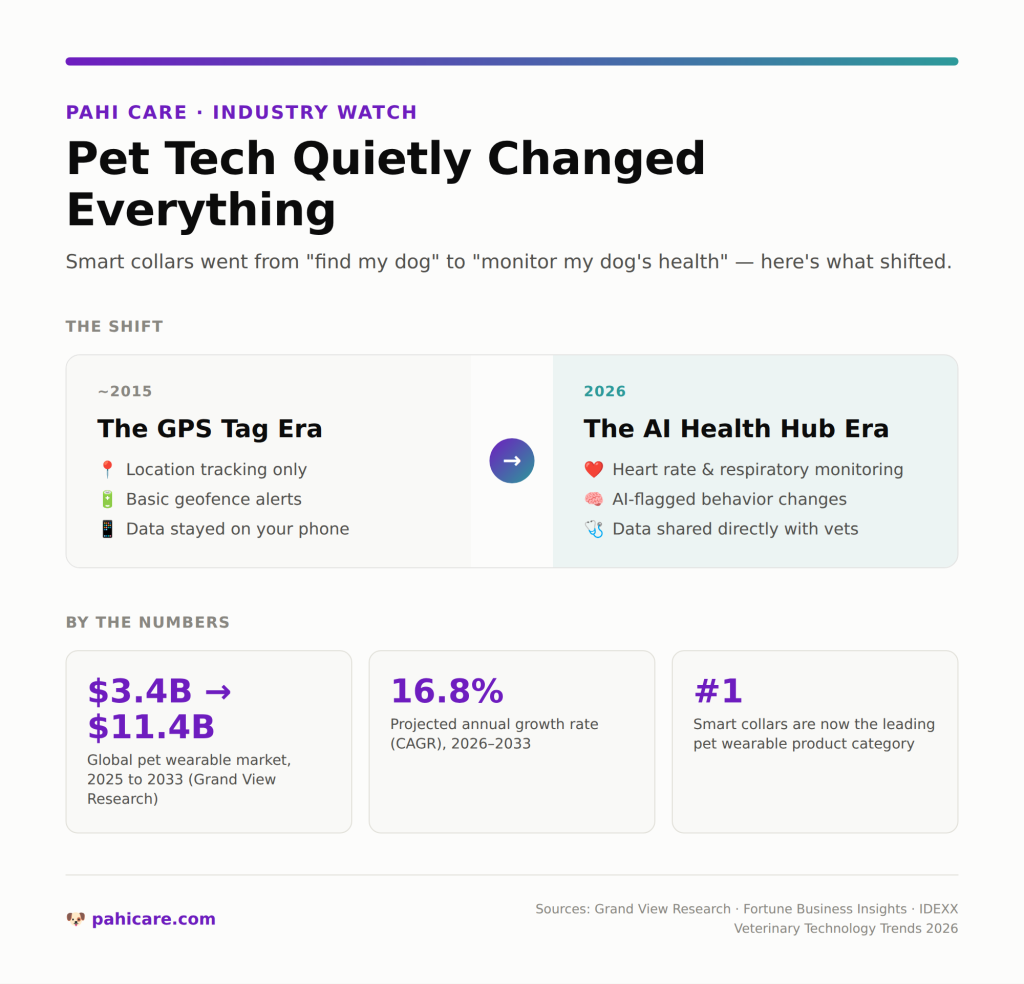
Ten years ago, “pet tech” meant a plastic GPS tag that beeped when your dog wandered too far from the yard. Today, that same spot on the collar has quietly turned into something closer to a wearable hospital — one that can flag a racing heartbeat before you notice your dog acting off, and pass that data straight to a vet who hasn’t even met your pet in person yet. That shift, from novelty gadget to genuine healthcare infrastructure, is the real story of pet tech in 2026.
A market that’s no longer a niche
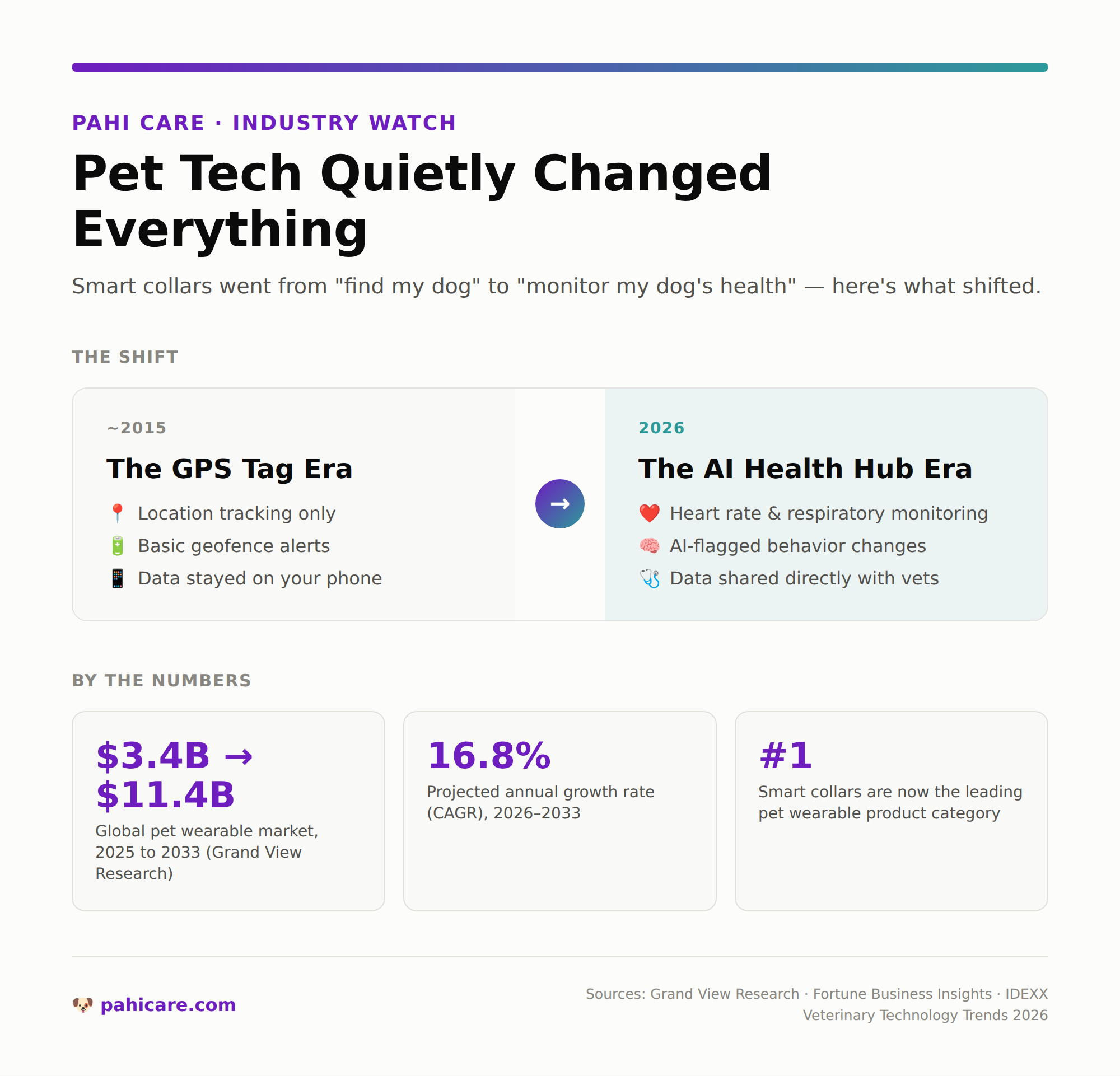
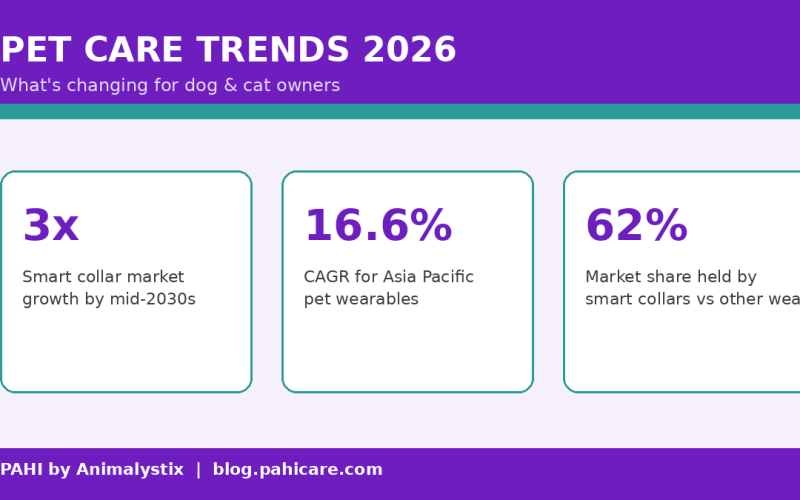
The numbers make the shift hard to ignore. Grand View Research pegs the global pet wearable market at roughly $3.4 billion in 2025, climbing toward $11.4 billion by 2033 — a 16.8% annual growth rate. Fortune Business Insights lands on slightly different figures ($4.16 billion in 2025, heading toward $13.12 billion by 2034), but the direction is identical: this stopped being a niche accessory market years ago. Smart collars now make up the single largest product category, and RFID-based tracking still leads the pack — but GPS is the fastest-growing segment of all, as owners lean harder into real-time location and safety features.
From “where’s my dog” to “how’s my dog”
What’s more interesting than the market size is what’s inside the devices. Early pet wearables did one job: location. The current generation stacks GPS alongside motion sensors, heart-rate and respiratory monitoring, and even barking-pattern detection — all feeding into a single lightweight collar. It’s not tracking anymore, it’s monitoring, and that distinction matters. A device that notices a sudden drop in activity or an irregular heart rate isn’t just convenient — it’s the kind of early signal that can mean catching a health issue weeks before it becomes an emergency room visit.
Vets are starting to build around this. According to IDEXX’s rundown of 2026 veterinary technology trends, wearables and remote monitoring devices are increasingly feeding data directly into clinical workflows — vets reviewing continuous vitals from home-based devices rather than relying solely on the ten minutes of an annual checkup. Pair that with the rise of virtual consultations, and pet healthcare is edging toward something that looks a lot like the shift human medicine went through with fitness trackers and telehealth, just a few years behind.
Why this shift actually matters for pet parents
It’s easy to wave this off as tech-industry hype, but the practical upside is real. Most pets are experts at hiding discomfort — it’s an instinct left over from being prey animals in the wild, and it means owners often only notice something’s wrong once it’s already serious. Continuous monitoring closes that gap. You don’t need to be a vet to notice “her heart rate has been climbing for two days” or “he’s barely moved since yesterday” when the data is right there instead of buried in your own observation.
This is exactly the space PAHI was built for — an AI-powered collar that combines GPS, health telemetry, and camera monitoring in one device, rather than making pet parents choose between a tracker and a health monitor. As the wider market catches up to that idea, it’s less about one product and more about a genuine change in what pet owners should expect a collar to do for them.
What to actually look for
If you’re shopping in this category for the first time, skip anything that only promises location tracking — that bar is table stakes now. Look for continuous health metrics (heart rate, activity, sleep), a battery life that survives more than a day or two, and ideally, a way to share that data with your vet directly rather than screenshotting a graph. The devices worth paying for in 2026 aren’t the ones that tell you where your pet is. They’re the ones that help you catch what you’d otherwise miss.

Great insight