Is Your Dog Secretly Overheating?
 PAHI Care Team
·
August 27, 2026
·
2 min read
PAHI Care Team
·
August 27, 2026
·
2 min read
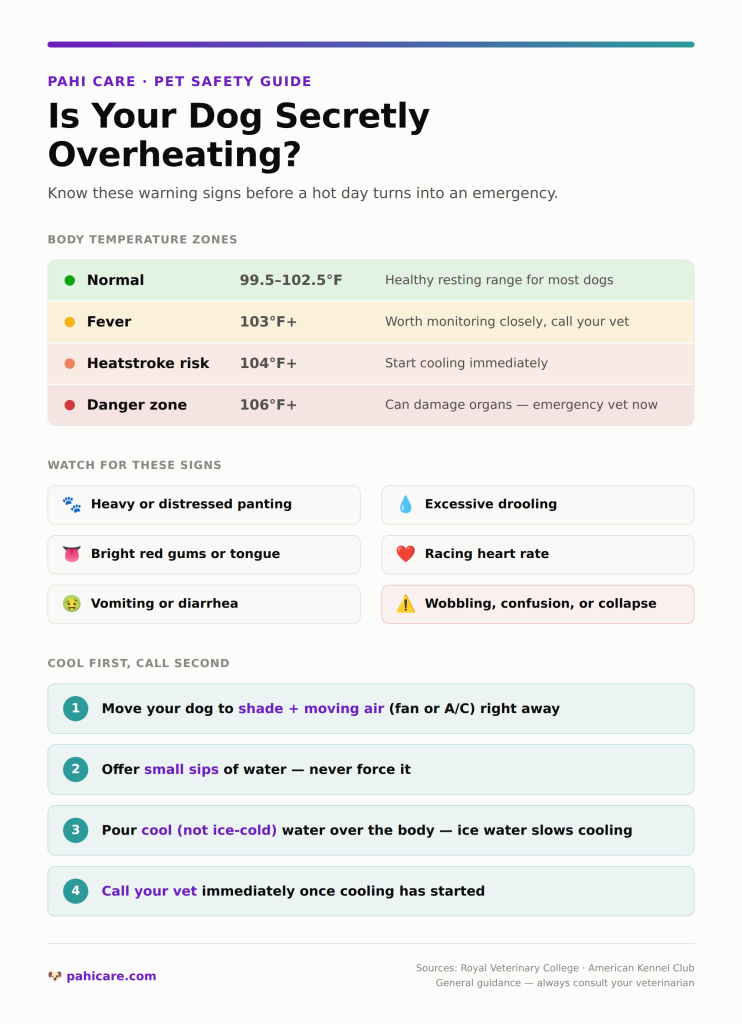
It’s peak summer, your dog just did three laps around the yard, and now they’re sprawled out panting like a freight train. Cute? Sure. Normal? Also probably fine. But here’s the thing — the line between “just hot” and “actual emergency” is thinner than most pet parents realize, and dogs are terrible at telling you which side of it they’re on.
Unlike us, dogs can’t really sweat their way out of trouble. They rely almost entirely on panting to dump heat, which works great right up until it doesn’t — and when it stops working, things escalate fast.
The numbers that actually matter
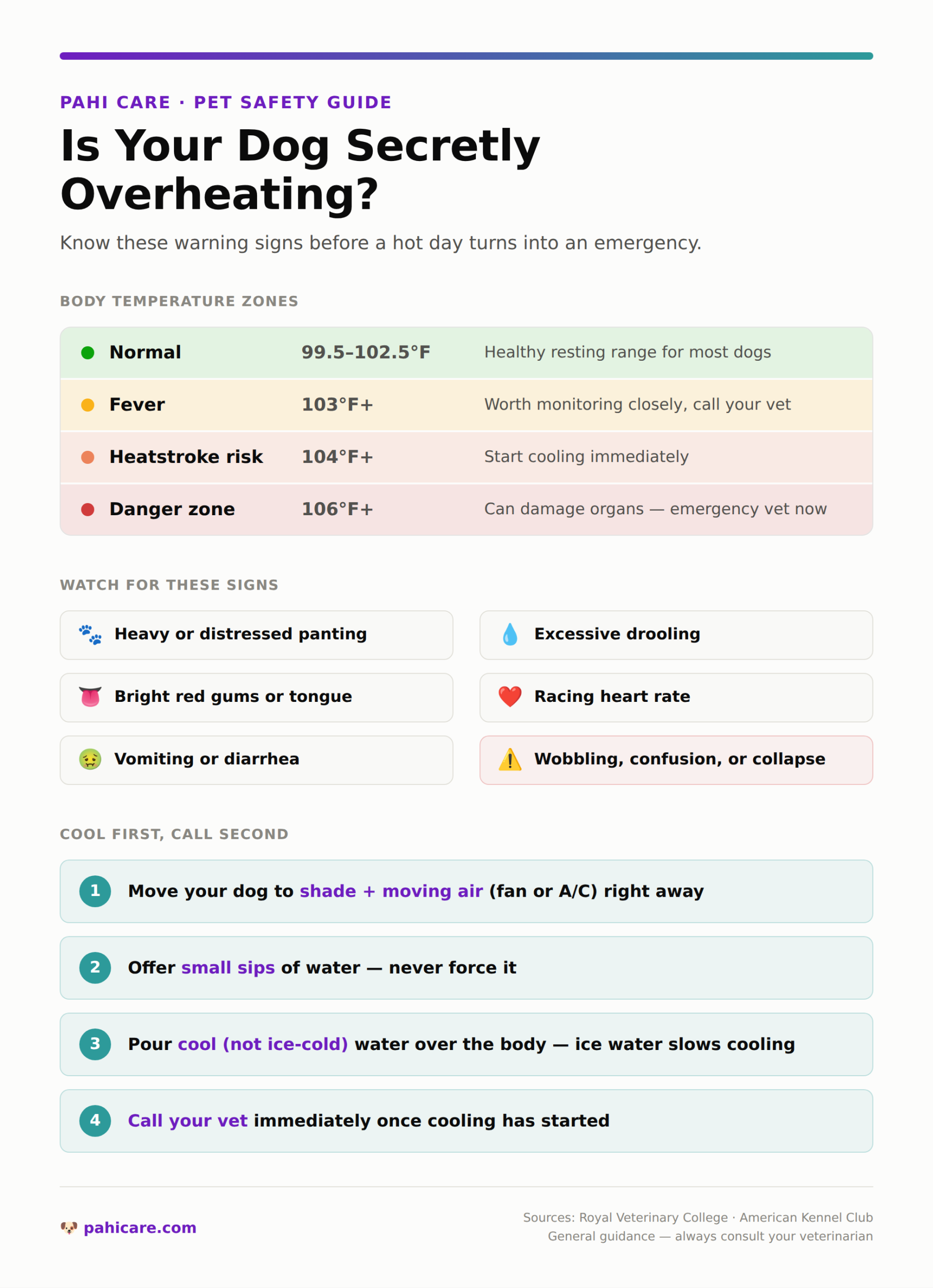
A healthy dog’s normal temperature sits somewhere between 99.5°F and 102.5°F. Once they cross 103°F, that’s a fever worth watching. At 104°F and up, you’re in heatstroke territory and it’s time to act — not wait and see. Above 106°F, you’re looking at possible organ damage, and this becomes a full-blown emergency.
The tricky part? You’re not walking around with a thermometer. So watch the behavior instead: heavy or distressed panting, excessive drooling, gums or tongue that look brighter red than usual, a heart rate that seems to be racing, or vomiting. If things progress to wobbling, confusion, or collapse, you’re already past “keep an eye on it.”
Cool first. Call second.
If you suspect your dog is overheating, don’t wait for a vet appointment to start helping. Get them into shade with airflow — a fan, A/C, whatever’s fastest. Offer small sips of water (never force it). Pour cool water over their body — not ice-cold, which can actually work against you by slowing the cooling process down. Then call your vet immediately, even as you’re doing all of the above.
The biggest mistake most of us make isn’t ignoring the signs — it’s assuming we’d definitely notice in time. Heatstroke can move from “seems a little off” to “serious” faster than you’d think, especially in flat-faced breeds, seniors, or dogs carrying extra weight.
If you’re already tracking your dog’s vitals with something like a smart collar, keep half an eye on any unusual heart-rate or activity spikes on hot days — it’s an easy early warning that’s easy to miss otherwise. But even without one, the checklist above will get you 90% of the way to catching trouble early.
Stay cool out there — both of you.


A very good blog