Heatstroke in Dogs: Symptoms and Warning Signs Before It’s an Emergency
 Mallika Chatterjee
·
September 16, 2026
·
3 min read
Mallika Chatterjee
·
September 16, 2026
·
3 min read
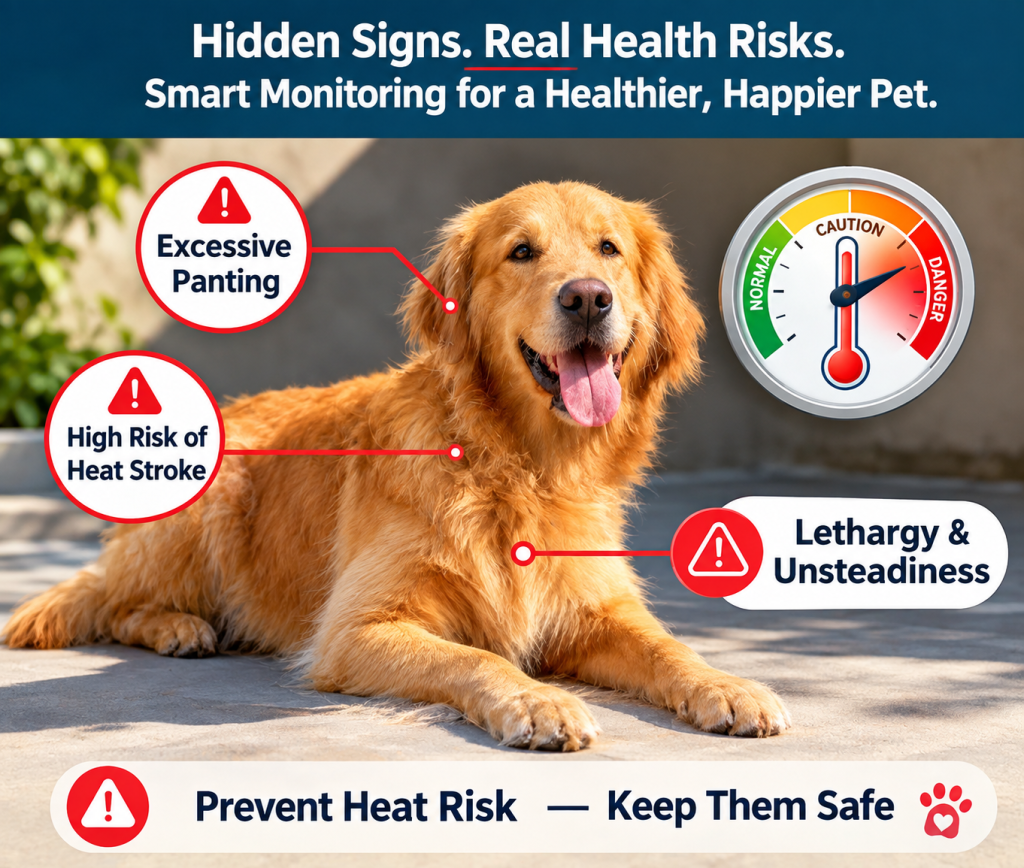
It’s 34°C, your dog just sprinted around the park for twenty minutes, and now they’re panting like a freight train. Normal cool-down, or something worse? Knowing the heatstroke in dogs symptoms to watch for is the difference between catching it early and a terrifying trip to the emergency vet — because heatstroke can go from “a little hot” to life-threatening in minutes.
What Actually Counts as Heatstroke?
A healthy dog runs between 100.5°F and 102.5°F (38-39.2°C). Once their internal temperature climbs past 105°F, their body can’t cool itself fast enough and heatstroke sets in. Here’s the part most owners don’t realize: dogs don’t sweat like we do. They’ve only got sweat glands in their paw pads, so panting is basically their only real defense against heat. In a hot car, a closed room, or even just a humid afternoon walk, that defense can fail fast — sometimes within minutes.
Heatstroke in Dogs Symptoms: The Early Warning Signs
Catching it early is everything. Watch for:
Heavy, frantic panting that doesn’t slow down. Excessive drooling. Bright red or purplish gums and tongue. Skin that feels hot to the touch. A racing heart rate. Wobbliness or trouble standing. Sudden hyperactivity followed by weakness.
If it progresses, you may see vomiting, bloody diarrhea, confusion, seizures, or collapse — at that point, it’s a full-blown emergency and every minute matters.
Who’s Most at Risk
Any dog can overheat, but some are far more vulnerable: brachycephalic (flat-faced) breeds like Pugs and Bulldogs, senior dogs, puppies, overweight dogs, dark or thick-coated breeds, and dogs with heart, respiratory, or thyroid issues. If your dog checks one of these boxes, treat hot days with extra caution — shorter walks, more shade, more water breaks.
What To Do If You See the Signs
Get your dog out of the heat immediately, offer cool (not ice-cold) water, and use damp towels or a fan to bring their temperature down gradually. Then call your vet or head to an emergency clinic right away, even if they seem to be recovering — internal damage can show up hours later.
This is exactly the kind of moment where knowing your dog’s normal baseline pays off. PAHI’s Dotty AI keeps an eye on behavior patterns day to day, so unusual restlessness or distress doesn’t just blend into “it’s a hot day” — you get a heads-up before it becomes an emergency.
Bottom line: heatstroke sneaks up fast, but it’s also one of the most preventable emergencies out there. A little vigilance on hot days goes a long way.


Very useful info