Dog Sleep Position Meaning: What Your Dog’s Snooze Says About Their Comfort
 Abhinandan Banerjee
·
October 13, 2026
·
3 min read
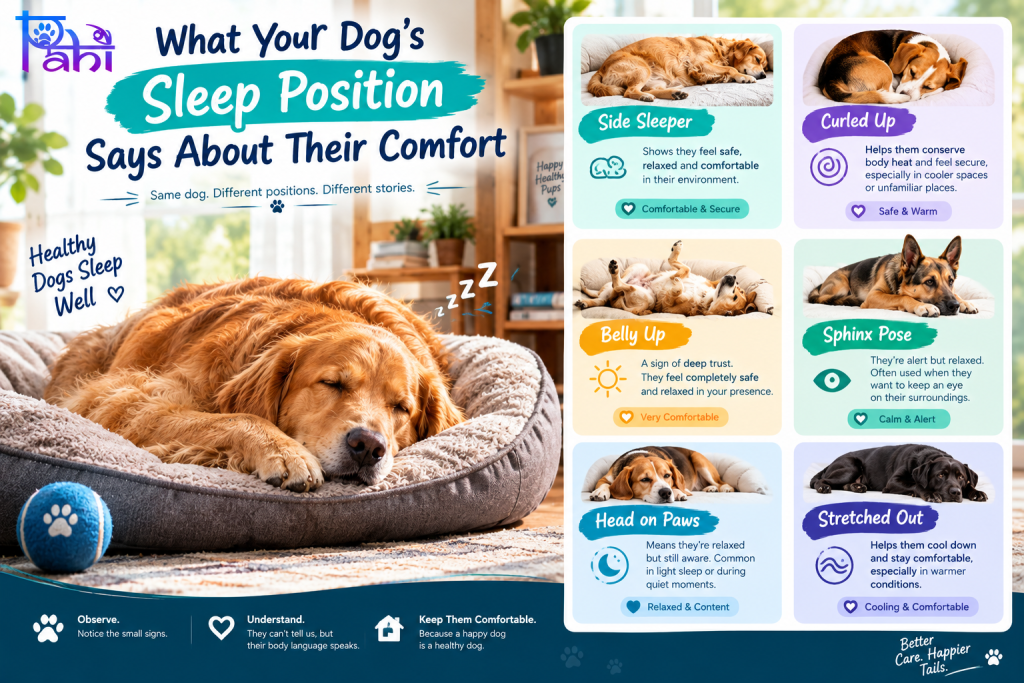
Ever walked into the room to find your dog folded up like a pretzel, or sprawled flat on their back with all four paws in the air? That’s not random. The dog sleep position meaning behind every snooze style actually tells you a lot about how comfortable, secure, and relaxed your pup feels in that moment — and sometimes it’s a clue worth paying attention to.
Here’s what each classic sleeping pose is really saying.
The Side Sleeper
Legs stretched out, body loose, breathing slow and even — this is about as relaxed as a dog gets. Side sleeping means your dog feels completely safe in their environment. It’s the canine equivalent of sinking into a couch after a long day.
The Curled-Up “Donut”
Nose tucked near the tail, body wound into a tight circle. This position helps dogs conserve body heat, which is why you’ll see it more in cooler rooms or in dogs still settling into a new home. It’s a comfort move, not a worry sign.
Belly Up
Paws in the air, belly fully exposed — this is the most vulnerable position a dog can sleep in, which is exactly why it only happens when they feel deep trust. Exposing the belly means no threats on the radar.
The Sphinx Pose
Head resting on outstretched paws, body upright. This is a “light sleep” position: calm, but alert enough to get moving fast if something interesting happens. Common during short daytime naps rather than deep nighttime sleep.
Head on Paws
Similar to the sphinx but more settled. Your dog is relaxed and aware, often drifting in and out of light sleep — the kind of nap where one ear is still half-listening for the fridge door.
Stretched Out (“Superman”)
Front legs forward, back legs stretched behind, belly to the floor. Dogs use this pose to cool down, which is why it shows up more on warm days or cool tile floors.
When a Sleep Position Is Worth a Second Look
None of these positions are a problem on their own — dogs rotate through several of them in a single nap. What’s actually worth noticing is a sudden change: a dog who always sprawls out but starts curling tightly every night, or one who stops lying on a sore side. Sleep patterns shift before owners usually notice behavior changes, which is part of why wearable health monitoring for pets — like the activity and rest tracking built into PAHI’s Dotty AI — has become useful for catching those gradual shifts early, rather than relying on guesswork.
For most dogs, though, a good flop onto the side or a comfortable curl just means one thing: they feel at home.