Is Pet Telemedicine in India Worth It? What It Can (and Can’t) Do
 Anish Ghosh
·
September 21, 2026
·
3 min read
Anish Ghosh
·
September 21, 2026
·
3 min read
Your dog’s been scratching non-stop for two days, it’s 9pm, and the nearest clinic closes in twenty minutes. Sound familiar? This is exactly the gap pet telemedicine in India was built to fill — and after a week of pandemic-era hype and a flood of new apps, it’s worth asking the honest question: is it actually worth your money, or just a convenience tax?
The short answer: it depends entirely on what you’re calling the vet about.
What Pet Telemedicine Actually Gets Right
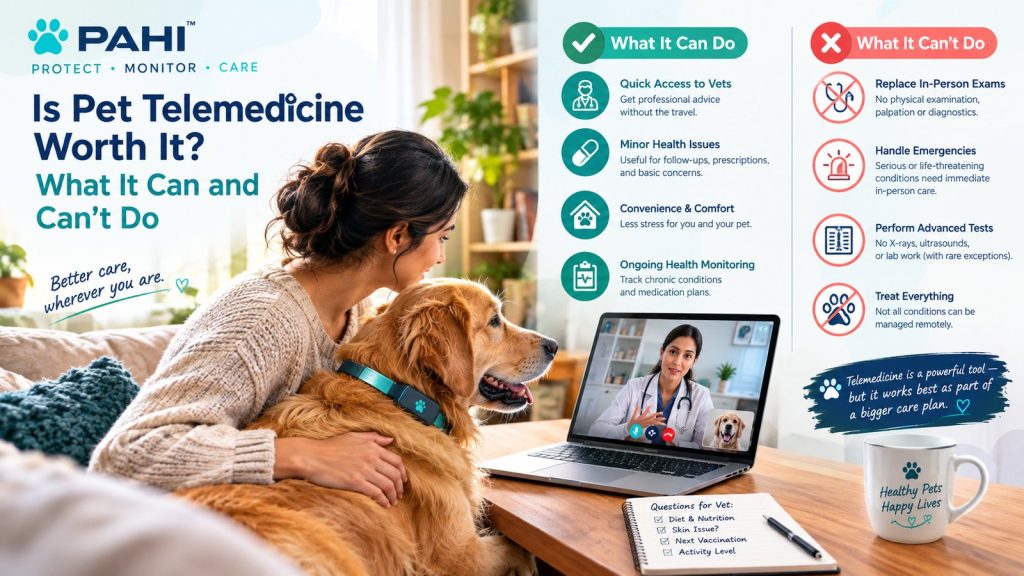
Urban India has gone digital fast — surveys suggest well over half of city-dwelling pet parents now lean on some kind of app or online tool for pet care, and telehealth adoption across veterinary medicine has jumped sharply since the pandemic. And for good reason. A video call with a vet is genuinely great for follow-ups after a procedure, second opinions on a diagnosis you’re unsure about, behavioral and training questions, diet tweaks, medication reminders, and the classic “is this normal or should I panic” photo you send at midnight. No traffic, no waiting room stress for an anxious dog, no taking half a day off work for a five-minute chat.
Where It Hits a Wall — Fast
Here’s what a screen simply cannot do: feel a lump, listen to a heartbeat, run bloodwork, take an X-ray, or physically stop a seizure. If your pet is dealing with breathing difficulty, severe trauma, suspected poisoning, a blocked bladder, unexplained swelling, or won’t stop bleeding — close the app and get to a clinic. Vets everywhere are clear on this: without hands-on examination and diagnostics, a remote consult can guide you, but it can’t diagnose or treat anything serious. Chronic issues like ongoing weight loss, dental pain, or neurological symptoms also need an in-person look sooner or later, not an endless string of video calls.
So, Is It Worth It?
Treat telemedicine as your pet’s first responder, not its emergency room. It’s brilliant for triage — figuring out whether tonight’s worry is a “watch and wait” or a “go now,” and for everything routine in between. Come prepared: have vaccination records handy, a clear video of the symptom, and a short list of what’s actually changed. Pair that habit with something that’s always watching in the background — a smart collar that flags unusual heart rate, temperature, or behavior shifts before you’d even notice them — and you get the best of both: fewer unnecessary trips, and faster action on the ones that actually matter.