Pet Tracker 2G Network Problem: Why Most GPS Collars Could Go Dark
 Avipsa Banerjee
·
October 12, 2026
·
2 min read
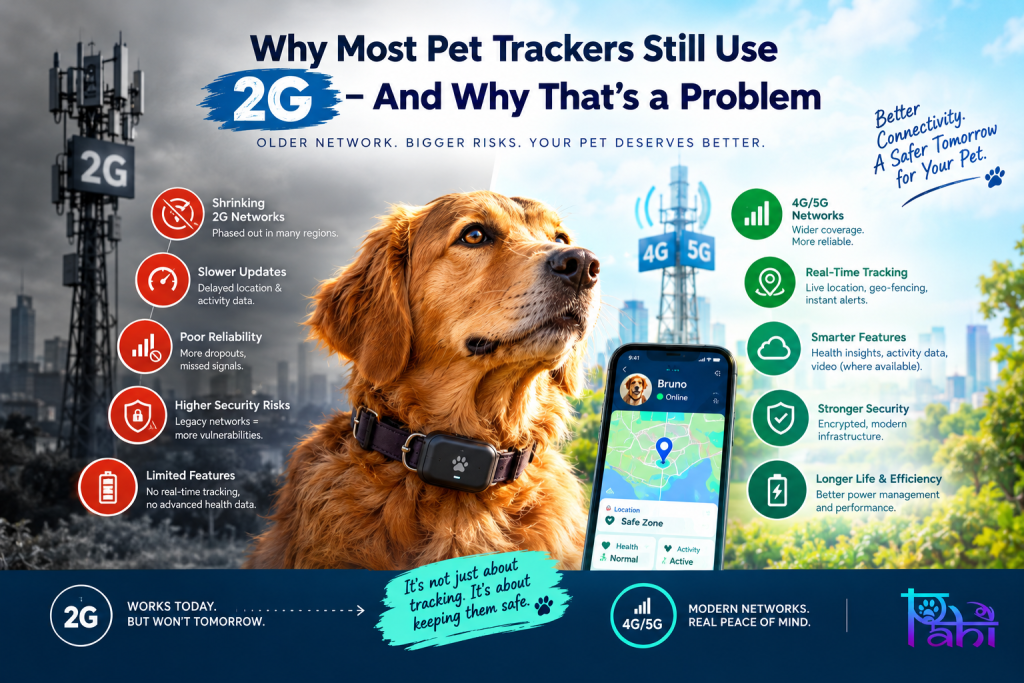
Here’s an uncomfortable truth about most “smart” pet trackers on the market: a lot of them are still quietly running on 2G. And the pet tracker 2G network problem is bigger than most pet parents realize — because 2G isn’t just slow, it’s being switched off, market by market, while your dog’s collar keeps depending on it.
The Pet Tracker 2G Network Problem Nobody Tells You About
2G was the obvious choice for early GPS trackers: cheap chips, low power draw, and coverage almost everywhere. The catch? Telecom operators built 2G for a world of basic phones, not years-long IoT devices sitting on a dog’s neck. According to the GSA’s latest count, there are now 313 completed, planned, or ongoing 2G and 3G shutdowns across 89 countries, with 139 operators in 70 countries having already finished or announced their 2G switch-off. That number has climbed from 254 just two years ago — the sunset is accelerating, not slowing down.
What Happens When the Network Actually Goes Dark
This isn’t hypothetical. When 2G networks shut down in several major markets between 2017 and 2020, thousands of pet trackers went permanently offline overnight — no warning banner, no software fix, just a collar that stopped reporting location. The worst part? Owners usually found out during an actual emergency, the one moment a tracker is supposed to work.
Why This Matters More for Pets Than Phones
You upgrade your phone every few years anyway. A pet collar is expected to last the lifetime of a device purchase — which means a tracker bought today on 2G could be obsolete well before its hardware wears out. In India specifically, Jio and Vodafone Idea have both publicly pushed regulators for a formal 2G-and-3G sunset policy, arguing it’s inefficient to keep maintaining legacy towers. Whichever way that policy lands, the direction is clear: 2G’s days are numbered, and the clock is ticking faster in some regions than others.
What to Actually Check Before You Buy a Tracker
Before picking a GPS collar, ask the one question most buyers skip: what network does this run on? A tracker built on 4G (or better) isn’t just faster — it’s future-proofed against a shutdown that’s already happening around the world. That’s the kind of question PAHI gets asked a lot, and exactly why it’s worth asking it about whatever collar you’re considering, including ours.