How Much Exercise Does Your Dog Actually Need by Breed
 Avipsa Banerjee
·
October 6, 2026
·
3 min read
Avipsa Banerjee
·
October 6, 2026
·
3 min read
If you’ve ever wondered why your Husky is bouncing off the walls after a 20-minute walk while your neighbor’s Bulldog is already asleep on the porch, the answer is simple: dog exercise needs by breed are wildly different, and “one walk a day” is bad advice for almost everyone. Treating every dog like a generic dog is how you end up with a bored, destructive Border Collie or an exhausted, overheating Pug.
Why “One Walk a Day” Doesn’t Work for Every Dog
Exercise needs come down to build, breathing, and breeding history. A dog bred for twelve hours of herding or hunting has a completely different engine than a dog bred to sit on a lap. Age, weight, and health matter too — but breed is the biggest lever, and it’s the one most owners ignore.
High-Energy Breeds Need Serious Mileage
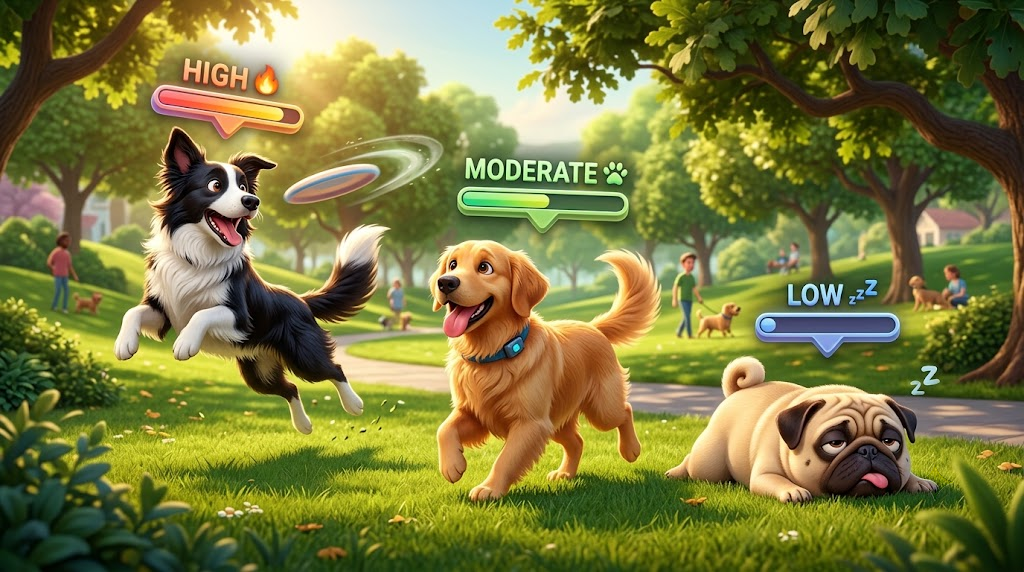
Huskies, Border Collies, German Shepherds, and other working or herding breeds are built for 2+ hours of vigorous activity a day — not just a walk, but real work: running, fetch, agility, or a job to do. Skip this and that energy doesn’t disappear, it turns into shredded furniture and 3am zoomies.
Flat-Faced and Low-Energy Breeds Need Less (But Still Need It)
Bulldogs, Pugs, and other brachycephalic breeds have narrow airways that make heavy exertion risky, especially in heat. Vets generally recommend short, gentle sessions — think 20 to 30 minutes, twice a day, away from midday sun — rather than one long haul. Less isn’t “none,” though; these breeds still need consistent movement to avoid the weight gain they’re already prone to.
Toy Breeds and Seniors: Little and Often
Chihuahuas, Maltese, and aging dogs of any breed generally do well on shorter, more frequent outings — often around 30 minutes total, split up through the day. It’s less about distance and more about keeping joints moving and minds engaged.
The Real Risk Is Guessing Wrong
Here’s the uncomfortable stat: an estimated 59% of dogs are overweight or obese, and under-exercising is one of the biggest silent contributors. Most owners aren’t neglectful — they just don’t have a clear read on whether their specific dog is actually getting enough activity, or too much.
This is exactly the gap PAHI’s smart collar is built to close. Between GPS-tracked activity and Dotty AI watching behavior patterns over a 14-day calibration period, PAHI learns what “normal” actually looks like for your individual dog — not a breed chart average — so you know when activity is genuinely falling short, instead of guessing.