Senior Dog Health: What Changes After Age 7
 Anish Ghosh
·
September 29, 2026
·
2 min read
Anish Ghosh
·
September 29, 2026
·
2 min read
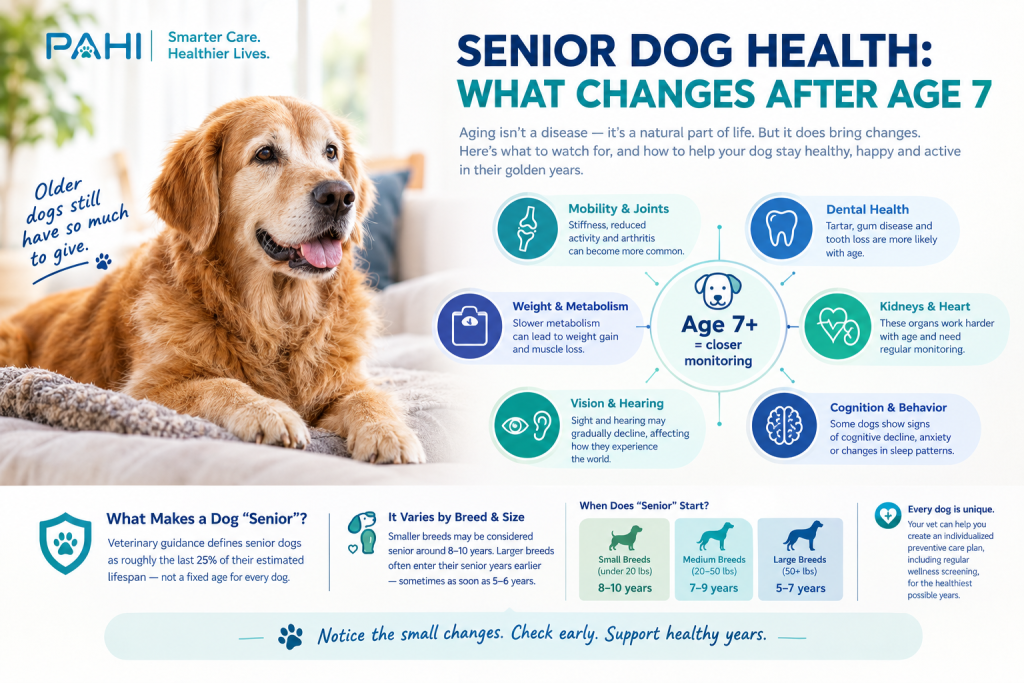
Somewhere around age 7, your dog quietly crosses a line nobody warns you about: senior dog health suddenly becomes a real thing you have to think about, not a someday problem. There’s no birthday candle for it — just a slightly slower stroll to the door, a bit more gray around the muzzle, and a body that’s aging roughly seven times faster than yours.
The “45-in-Human-Years” Reality Check
A 7-year-old dog is doing the biological equivalent of being somewhere between 45 and 75 years old, depending on size and breed — bigger dogs hit “senior” faster than small ones. That’s not a reason to panic. It’s a reason to start paying closer attention to things you used to shrug off.
What Actually Changes (Body, Brain, Behavior)
The shifts are rarely dramatic on any single day. Watch for: slower rises from lying down, appetite swings in either direction, new lumps or bumps, noticeably bad breath, more sleep than usual, a dip in patience or tolerance for chaos, and bathroom habits that change. Individually, each one looks like “just getting older.” Together, they’re your dog telling you something worth checking.
The Twice-a-Year Vet Rule Nobody Follows
Vets generally recommend senior dogs get checked twice a year instead of once — blood work, urine, the works — because conditions like arthritis, kidney disease, and diabetes are far easier to manage when they’re caught early rather than after symptoms pile up. Most pet parents still default to the old once-a-year rhythm simply because nothing looks urgent yet. That’s exactly the trap.
Catching the Small Stuff Before It’s Big Stuff
The honest challenge with senior dog health is that you’re not with your dog every waking hour, and the early signs are subtle by design. This is where a bit of ongoing observation helps — something built into daily life rather than a twice-a-year snapshot. PAHI’s Dotty AI, for instance, learns your dog’s normal behavior patterns over time and flags the kind of subtle shifts — restlessness, changed activity, altered routines — that are easy for even attentive owners to miss between vet visits.
Age 7 isn’t a cliff. It’s a nudge to start watching more closely, so the next decade with your dog is a comfortable one.