Why Does My Dog Eat Grass? The Myths vs the Science
 Mallika Chatterjee
·
September 26, 2026
·
2 min read
Mallika Chatterjee
·
September 26, 2026
·
2 min read
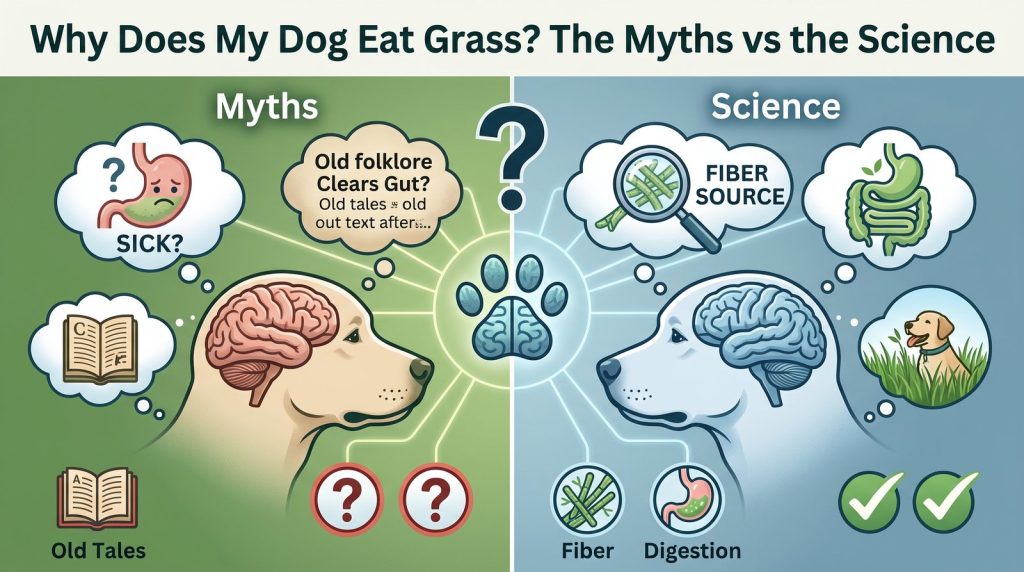
If you’ve ever watched your dog casually graze the backyard like a tiny cow, you’ve probably asked the same question every dog parent eventually asks: why do dogs eat grass? The old answer everyone repeats is “their stomach hurts.” Turns out, that’s mostly a myth — and the real science is a lot more interesting.
The Myth: “My Dog Is Sick”
Grass-eating gets blamed on upset tummies constantly, but the numbers don’t back it up. In studies of dog owners, less than 25% of grass-eating dogs actually vomited afterward, and only around 10% showed any signs of illness before munching away. If grass were a self-medicating emergency button, we’d expect those numbers to be flipped. They’re not.
So What’s Actually Going On?
A few theories hold up better than the “sick stomach” story. First, fiber: grass is roughage, and dogs — like us — sometimes need a bit more of it to keep digestion moving smoothly. Second, instinct: wild canine ancestors ate whole prey, stomach contents and all, which often included plant matter. Even today, researchers have found plant material in 11% to 47% of wolf stool samples. That habit didn’t just disappear because dinner now comes in a bag.
Boredom and attention-seeking matter too. One well-known study found grass-eating went up as owner contact time went down — so a dog left alone in the yard might just be entertaining itself. And some pups genuinely seem to just like the taste and texture, the same way they inexplicably love sniffing one specific patch of sidewalk every single walk.
When It’s Actually Worth Watching
Occasional grazing on clean grass is normal dog behavior, not a red flag. What is worth watching: sudden, frantic, or obsessive grass-eating, grass from lawns treated with pesticides or fertilizer, or grass-eating paired with repeated vomiting, lethargy, or appetite changes. That combination is when a vet visit — not a Google search — is the right call.
The Bottom Line
Grass-eating is one of those dog quirks that looks alarming but is usually just… dogs being dogs. Understanding your own pet’s normal patterns is what actually helps you catch the rare moments when something’s off. That’s the whole idea behind PAHI’s Dotty AI — it learns what’s normal for your specific dog over a 14-day calibration period, so it’s far easier to tell “just being a dog” apart from “something’s actually wrong.”