Separation Anxiety in Dogs: What Actually Helps
 Avipsa Banerjee
·
September 23, 2026
·
3 min read
Avipsa Banerjee
·
September 23, 2026
·
3 min read
If your dog turns into a different animal the second you grab your keys, you’re not imagining it — separation anxiety dogs deal with is one of the most common (and most misunderstood) behavior issues out there. It’s not “bad behavior.” It’s closer to a panic attack, and it’s fixable with the right approach.
The Signs You’re Probably Missing
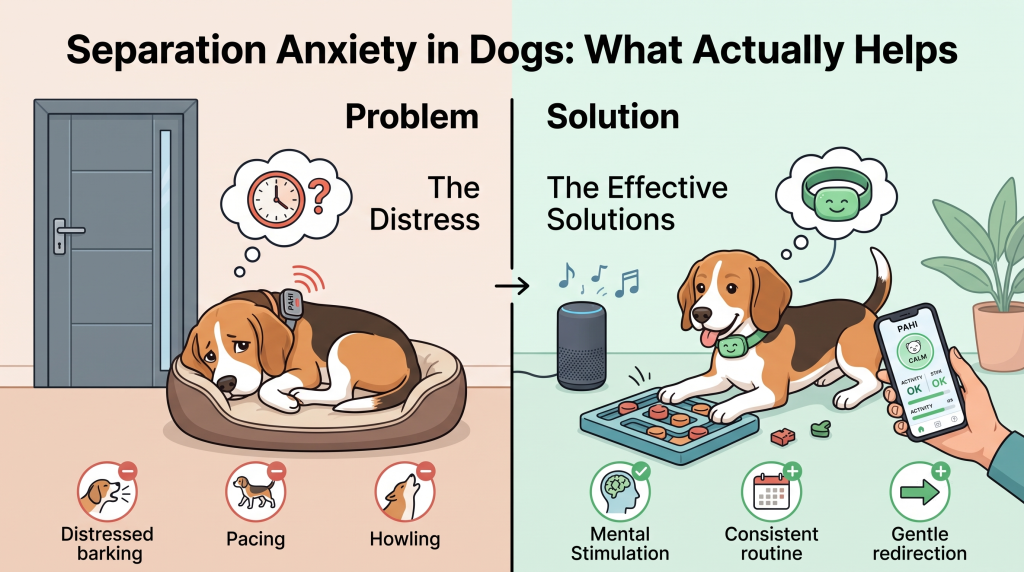
Most owners picture destroyed cushions and think that’s the whole story. But separation anxiety shows up in quieter ways too: pacing in tight circles, drooling before you’ve even left, whining at the door, or a dog who won’t eat their favorite treat until you’re back. Some dogs go straight for the door or window frame, which is how self-inflicted injuries happen. If your dog is “perfectly fine” until the exact moment you put your shoes on, that’s the tell.
Why It Happens
Dogs who were rehomed, adopted from a shelter, or who went through a sudden schedule change (hello, return-to-office) are especially prone. So are dogs who’ve simply never practiced being alone. It isn’t about spite, and it isn’t about a chewed-up sofa being “revenge” — punishing it after the fact only adds fear on top of fear.
What Actually Helps
Start small. Grab your keys, put on your shoes, and then just… sit down. Repeat departure cues without leaving until they stop meaning anything. Once your dog’s calm with that, work up to two-second absences, then ten, then longer — the goal is leaving before anxiety kicks in, not testing how much they can take. A frozen treat-stuffed toy at the door can turn “you’re leaving” into “snack time.” And a genuinely tired dog — physically and mentally — has a much easier time settling.
For dogs who spiral fast, this is where knowing what’s actually happening while you’re gone matters. A lot of pet parents only find out how bad it got from a neighbor’s complaint or a shredded doormat. Tools like PAHI’s Pet’s Eye camera and Dotty AI behavior detection exist for exactly this gap — they flag distress patterns (excess pacing, non-stop barking) in real time instead of leaving you to guess after the fact.
When to Call in Backup
If your dog is injuring themselves, anxiety isn’t improving after a few weeks of consistent work, or things are getting worse, loop in your vet or a certified behaviorist. Some dogs need short-term anti-anxiety support alongside training — that’s not a failure, it’s just part of getting them there faster.
The good news: separation anxiety has one of the highest treatment success rates of any dog behavior issue, as long as you’re consistent. Small, boring, repeated departures beat any quick fix.