How PAHI Tells Play From Distress: Inside Dotty AI Behavior Detection
 Abhinandan Banerjee
·
October 17, 2026
·
2 min read
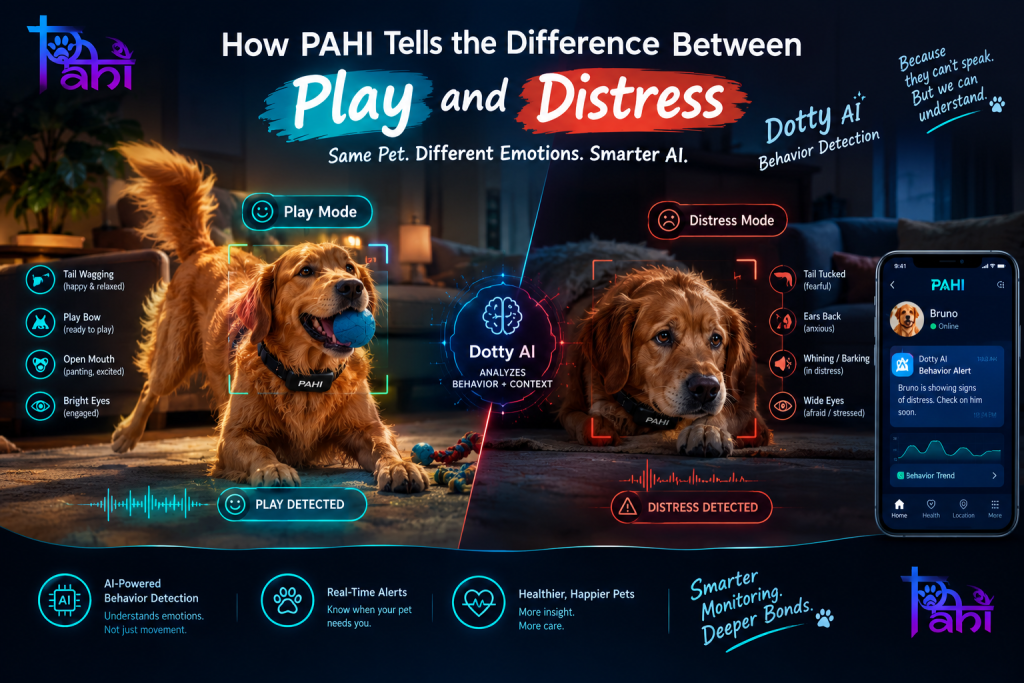
Your dog’s play bow and their panicked pacing can look eerily similar from across the room — fast movement, a raised tail, some vocalizing. That mix-up is exactly what Dotty AI behavior detection was built to solve: reading the fuller pattern of motion, posture, and context instead of guessing from a single twitch.
Why Play and Distress Look So Alike
A loose, wiggly tail wag and excited barking during a play session can look a lot like a tucked tail and anxious whining if you’re only glancing over. Dogs layer multiple signals at once — ear position, tail carriage, body weight, vocal pitch — and most of us only catch one or two before we look away. Miss the context, and a genuinely distressed pet can get read as “just excited,” especially when you’re not even in the room.
What Dotty AI Behavior Detection Actually Watches
PAHI’s collar pairs GPS and the Pet’s Eye HD camera with Dotty AI, which cross-references movement patterns from the collar’s sensors against what the camera sees — bursts of play-bow crouching versus stiff, repetitive pacing; relaxed bounding versus frozen stillness. Instead of flagging “movement detected,” it’s built to tell you whether that movement looks like fun or like fear.
The 14-Day Calibration That Makes It Personal
No two dogs play or panic the same way, so Dotty AI runs a 14-day calibration period after setup, learning your specific pet’s normal activity rhythm, resting patterns, and baseline energy before it starts flagging anything as unusual. A high-energy Labrador’s “normal” zoomies would look like a red flag on a senior dog with arthritis — that calibration window is what keeps alerts relevant instead of constant.
What You Actually See on Your Phone
When the pattern tips toward distress — tucked posture, repetitive whining, agitated pacing that doesn’t settle — you get a behavior alert, not just a location ping. That’s the gap PAHI is trying to close: most trackers tell you where your dog is; Dotty AI behavior detection is built to tell you how they’re actually doing while you’re not there to see it yourself.
It’s not a replacement for knowing your own pet’s body language — nothing beats that. But for the hours you’re not watching, it’s a second set of eyes trained specifically on your dog.