Pet Insurance in India Is Finally Catching Up — Sort Of
 Mallika Chatterjee
·
October 14, 2026
·
2 min read
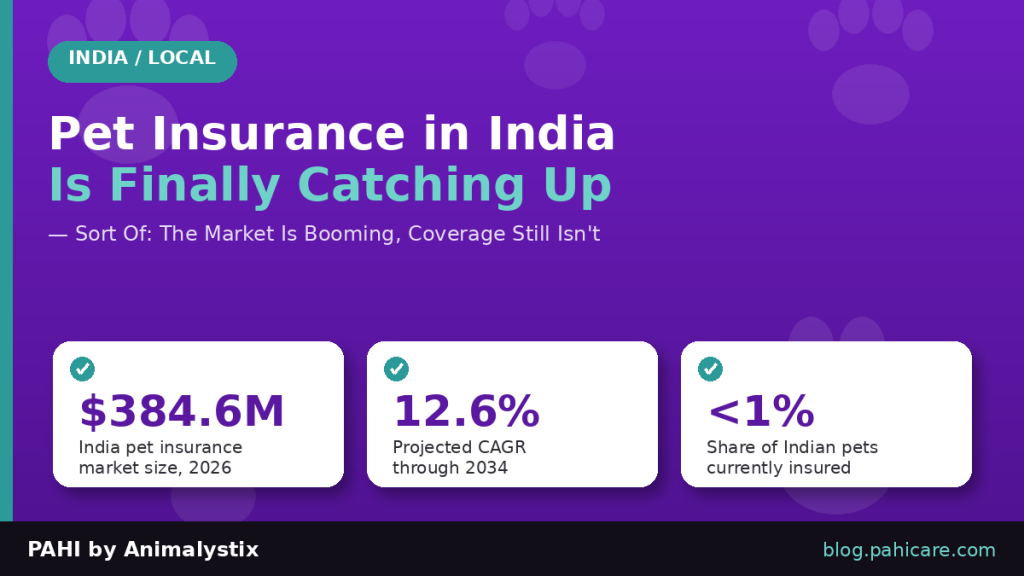
If you’ve ever paid a vet bill out of pocket and felt your stomach drop, you already know why pet insurance in India is suddenly a thing people are talking about. The market just hit roughly $384.6 million this year and is projected to nearly triple to $993.4 million by 2034 — a 12.6% annual growth rate that would make most industries jealous. But before you assume every dog park in Bangalore is swapping claim stories, here’s the catch: the hype is real, the coverage is not — yet.
The Numbers Look Great. The Reality Is Smaller.
Here’s the gap nobody puts in the headline: industry estimates put insured pets in India at well under 1% of the total pet population. For context, even the US — a famously “mature” pet insurance market after a decade of double-digit growth — only insures about 4.27% of pets. So when people say India is “catching up,” what they really mean is it’s finally showing up on the chart at all.
Who’s Actually Selling Pet Insurance India-Wide
Seven insurers currently offer pet policies here — Tata AIG, Digit, Bajaj Allianz, New India Assurance, Oriental Insurance, Generali Central, and Universal Sompo (the newest entrant). Basic cover typically runs ₹200–500 a month for a dog or cat, which sounds reasonable until you read the fine print.
What’s Covered (and the Stuff That Trips People Up)
Most plans handle accident and illness treatment, surgery, hospitalisation, and sometimes a death benefit or third-party liability. What they almost never touch: pre-existing conditions, routine vaccinations, breeding or pregnancy costs, and anything outside a 3-month-to-7/8-year enrollment window. There’s also a standard 14–30 day waiting period before illness claims kick in, so buying a policy the week before a vet visit won’t help you.
So Should You Actually Get It?
If you’ve got a breed prone to expensive surgeries, or you just hate financial surprises, a policy covering accidents and illness is genuinely worth pricing out now while your pet is young and enrollment windows are still open. It won’t replace good preventive care, but it’s one more layer of protection in a system that’s still figuring itself out. And until “well under 1%” becomes “well over 10%,” knowing what your pet is actually covered for — and tracking their health day to day — is still on you.